How to Choose a UX Agency: The Founder's Decision Framework (2026)

925studios
Creative agency for AI & Web3
How to Choose a UX Agency: The Founder's Decision Framework (2026)
Reviewed by Yusuf, Lead Designer at 925Studios
Six agencies. Six portfolio deck tours. Zero mentions of activation rates, churn, or what happens six months after the engagement ends. Choosing a UX agency in 2026 is harder than it looks because most studios have optimized for winning pitches, not delivering outcomes. The right agency for your product asks about your conversion funnel before the second slide and treats your retention number as a design problem, not a marketing one.
TL;DR:
Define the exact metric you need to move before briefing any agency
Evaluate portfolios for documented before/after outcomes, not visual polish
Ask directly who will work on your account from day one
Validate every shortlisted agency with reference calls using three specific questions
Always start with a paid pilot sprint before signing a retainer
Quick Answer: To choose the right UX agency in 2026, define the metric you need to improve (activation rate, conversion, retention) before reviewing any decks. Shortlist 4-6 studios based on relevant industry work, then interview them with outcome-focused questions. Ask who will personally handle your account, validate with recent references, and start with a fixed-scope pilot sprint before signing a retainer. This process typically takes 2-3 weeks and prevents six-month mistakes that run $50,000 to $150,000.
Why does hiring the wrong UX agency cost founders so much?
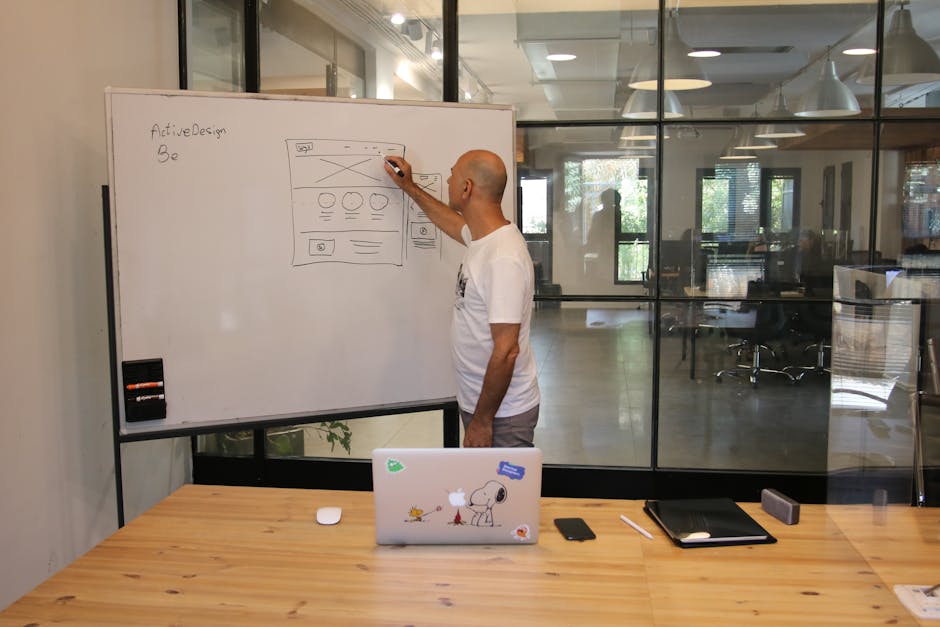
The cost of a mismatched agency hire goes far beyond the invoice. Research by Forrester found that every $1 invested in UX returns $100 on average, a 9,900% ROI when applied correctly (Forrester Research, 2022). That multiplier only works when the design work is tied to measurable business outcomes. When it is not, you pay full rate for screens that look good and change nothing. Fixing UX problems during development costs 10 times more than catching them in the design phase, and post-launch fixes cost up to 100 times more (ofspace.co, 2023). The typical founder who regrets an agency hire did not choose the wrong agency on visual quality. They chose the wrong one because they never defined what success would look like before signing. No target. No accountability. No clear way to know whether the $40,000 engagement moved anything. That is the real cost of a mismatched hire.
925Studios have reviewed dozens of agency proposals from founders who came to us after a misfire. The pattern is consistent: the original brief focused on "making the product feel better" rather than a specific measurable outcome. Without a target, there is no accountability and no way to evaluate whether the investment worked.
Not sure where the gaps are in your current product? Get a free UX audit from 925Studios.
How do you choose a UX agency that actually delivers results?
Step 1: Define the outcome before you write the brief
Before you contact a single agency, write down the one metric that would make this engagement a success. Not "improve UX." Something specific: raise activation rate from 18% to 35%, reduce churn by 2 percentage points in the first 90 days, increase pricing page conversion by 12%.
This single step filters out 60% of agencies immediately. Studios built around deliverables (screens, components, Figma files) will not push back on a vague brief. Studios built around outcomes will ask for your analytics data, existing user research, and business context before quoting. The ones who ask are the ones worth talking to.
Step 2: Build your shortlist using the right signals
The best agencies for your product are rarely the most visible on Dribbble or the most promoted on LinkedIn. Look for these signals when building your shortlist of 4-6 candidates:
Case studies that mention specific metrics, not just screenshots
Published work in your vertical (SaaS, fintech, healthtech, AI products)
Founders or PMs listed as references, not just marketing leads
Articles, talks, or frameworks the team has published (signals depth of thinking)
Team bios that include product and strategy roles alongside design titles
Clutch reviews and LinkedIn recommendations written by product leaders are more reliable than awards or follower counts. A studio with 12 detailed case studies and 8 Clutch reviews beats one with 200 Dribbble likes every time.
Want to see how an agency's portfolio reads at the outcome level? See how 925Studios documents results from client projects.
Step 3: Evaluate portfolios for outcomes, not aesthetics
When reviewing agency portfolios, the only question that matters about every case study is: what changed? Not what did they build, but what happened after they built it. A well-documented case study tells you the before state (drop-off at step 3 of onboarding, 14% conversion on the pricing page), the specific design decisions made and the reasoning behind them, and the outcome measured 30 or 60 days after launch. If a case study shows polished screens without a single data point, treat it as a signal. It does not mean the work was low quality, but it does mean the agency did not measure outcomes, which means they probably did not tie the work to your business goals either. Studios that document results have done the harder work of connecting design to what actually matters. That discipline shows up in how they run your project too. Look specifically for activation rate improvements in SaaS onboarding work, checkout conversion lifts in marketplace case studies, and engagement or retention changes in consumer apps.
Step 4: Run the first call as a structured interview
The first agency call is usually a sales call dressed up as a discovery meeting. Flip the dynamic. Come with four specific questions and evaluate their answers as seriously as you evaluate their portfolio. The four questions that separate outcome-oriented agencies from deliverable factories:
"Walk me through a project where the initial direction changed because of user research. What happened?"
"What does your definition of done look like? Is it screens delivered, or something shipped and measured?"
"Which of your case studies are you least proud of, and why?"
"If the designs you deliver do not move the metric we agree on upfront, what happens next?"
An agency that answers question 3 with a real story has the self-awareness to work through problems honestly. One that deflects or pivots only to success stories is optimizing for the close, not the relationship.
Step 5: Find out who will actually do the work
The bait-and-switch is the most common complaint in agency hiring. A senior partner runs the pitch, a junior designer runs your project. This is not unique to design agencies, but it is particularly damaging in UX work where strategic judgment drives every decision. Ask directly: "Who will be the primary designer on my account? Can I meet them before signing?" A good agency will have no hesitation introducing you to the person who will do the work. If the answer is "we'll staff the team based on project needs," that is a soft confirmation that the person pitching will not be the person designing.
When we run projects at 925Studios, the same team that evaluates your product in the first session is the team that delivers. Any agency you hire should meet this basic standard.
Step 6: Validate with references, and ask three specific questions
Agency references are often hand-picked success stories. Call them anyway, because most people tell the truth when asked direct questions. The three questions that cut through the prepared response:
"Was the timeline they quoted accurate? What slipped?"
"Did the work move the metric you were targeting? By how much?"
"Would you hire them again for a different project, and why?"
The answer to question 2 is the most important. A reference that says "we loved the designs but did not track the impact" is telling you something meaningful about how the agency operates.
Also check the agency's existing blog for their own content at how to evaluate SaaS UX agencies for a more detailed comparison framework.
Need a structured way to compare agencies side by side? Talk to the 925Studios team about your evaluation criteria.
Step 7: Start with a paid pilot sprint before any long contract
The most effective risk management tool in agency hiring is the paid pilot. Before committing to a 3 or 6-month retainer, propose a fixed-scope 2-4 week sprint with a clear deliverable and a defined success criterion. This could be a single user flow redesigned, a usability test with 5 users and a findings report, or a product audit with specific improvement recommendations. A good agency welcomes this structure because it gives them the chance to prove themselves on real work. An agency that resists the pilot model and pushes directly to a retainer is not confident in their ability to demonstrate value quickly. The pilot typically costs $5,000 to $15,000. A misaligned 6-month retainer runs $50,000 to $150,000. The math is easy.
Ready to start with a low-risk pilot before committing? Book a free 30-minute intro call with 925Studios.
What mistakes do founders make when hiring a UX agency?

Understanding what goes wrong is as useful as knowing the right process. These four mistakes account for the majority of bad agency experiences founders report across Clutch reviews and design community threads.
Hiring before the problem is defined
Founders often hire an agency when the product "feels off" without specifying what that means in measurable terms. An agency cannot solve a problem that has not been diagnosed. The brief needs a metric (activation rate, churn, conversion), a user segment (enterprise buyers, self-serve users, mobile-first audience), and a timeframe for measurement. Without these three inputs, the agency defaults to their strongest visual style and ships screens that look good but miss the actual gap entirely.
Choosing on aesthetics alone
Visual taste is the easiest thing to evaluate and the least predictive of outcomes. A stunning portfolio built entirely for D2C brands does not automatically translate to SaaS onboarding, enterprise dashboards, or fintech trust flows. Visual standard matters, but vertical experience and outcome documentation matter more. The portfolio that looks best in the pitch is rarely the one that performs best in practice.
Skipping the pilot and signing a long contract
Signing a 6-month retainer after one or two calls is how most expensive agency mistakes happen. The pilot sprint is not just about testing quality. It tests communication cadence, responsiveness, how the team handles feedback, and whether their process fits how you work. These factors matter more over six months than the quality of the first deliverable.
Not agreeing on success metrics before signing
"Better UX" is not a deliverable. Neither is "improved onboarding" or "more intuitive navigation." Before any contract is signed, both parties should agree on: the specific metric to move, the current baseline, the target number, and the timeframe for measurement. Without this agreement, there is no shared definition of done and no basis for accountability when results fall short of expectations.
What should you bring to every UX agency call?
Arriving at agency conversations prepared changes the dynamic entirely. These four tools give you the structure to evaluate and choose with confidence rather than gut feel.
The agency evaluation scorecard rates each shortlisted agency on five dimensions: industry relevance (0-5), outcome documentation in portfolios (0-5), team transparency (0-5), reference quality (0-5), and pilot availability (0-5). Any agency scoring below 18 out of 25 should be removed from consideration before the second call. This keeps the evaluation structured and prevents charm from outweighing substance.
The brief template should include: one sentence on the product and its core user, the specific metric you want to move and its current baseline, the timeline for measuring results, your budget range (even approximate), and three non-negotiables for how you work. Weekly syncs, Figma files shared in real time, usability testing included, whatever matters most to your process. A good agency responds to this brief with questions that prove they read it carefully.
The reference call guide builds on the three questions from Step 6 above, adding two more: "What would you do differently in how you structured the engagement?" and "What did the agency do that genuinely surprised you?" The second question surfaces both pleasant surprises and problems the reference did not volunteer upfront.
The pilot scope template defines: one specific user flow or screen set to redesign, one deliverable (usability test report, product audit, or annotated prototype), a fixed timeline of 2-4 weeks, a fixed fee, and one success criterion measured 4 weeks after delivery. Send this template to every finalist agency and compare how they respond to the structure.
Frequently Asked Questions

How do you know if a UX agency is actually good?
Look for case studies that document specific metrics before and after the engagement: activation rates, conversion percentages, churn reductions. A good agency measures the impact of its work and references those outcomes in client conversations. Portfolio visual quality matters, but outcome documentation is the real signal. Also check references from recent clients who held similar roles to yours, specifically founders or PMs rather than marketing leads, and ask them directly whether the work moved a business metric.
How much does a UX agency typically charge?
UX agency pricing in 2026 ranges from $5,000 for a single focused sprint to $150,000 or more for a full product redesign retainer. Mid-tier product-focused agencies charge $15,000 to $50,000 for a 6-8 week engagement. Retainers for ongoing design support typically run $8,000 to $25,000 per month depending on scope and team size. For early-stage products, a focused pilot sprint in the $8,000 to $15,000 range is usually the most efficient starting point before committing to a longer engagement.
What is the difference between a UX agency and a product design agency?
The terms are used interchangeably in most conversations, but there is a meaningful distinction. A UX agency typically focuses on research, information architecture, and interaction design. A product design agency usually handles the full design scope including visual design, design systems, and often front-end prototyping in tools like Framer or Webflow. For most startups, a full-service product design agency covers both, but it is worth confirming with any candidate what their exact scope includes and where they draw the line between design and development.
How long does a typical UX agency engagement last?
Most focused engagements run 6 to 12 weeks for a defined scope like an onboarding flow or pricing page redesign. Full product redesigns typically run 12 to 24 weeks. Ongoing retainers for continuous design support are usually structured in 3-month blocks with renewal options. Starting with a 2-4 week pilot before committing to a longer timeline is the most reliable way to evaluate fit before either party is locked into a longer commitment.
Should early-stage startups hire a UX agency or a freelancer?
For pre-product-market fit startups, a senior freelancer or small studio is often the better call. The overhead of a larger agency (account management, process ceremonies, multiple stakeholders) consumes time and budget that early-stage founders cannot spare. Once you have 10 to 15 paying customers and a conversion or retention problem that needs systematic work, a focused agency with relevant vertical experience becomes worthwhile. The exception is when you need to ship a first version quickly and have the budget to support a full agency sprint from the start.
What questions should I ask a UX agency before hiring?
The four most important questions are: Who will personally work on my account? Can you show me a case study where your design work improved a specific business metric? What happens if the work does not hit the target we agree on upfront? And can we start with a 2-4 week pilot before a longer commitment? Agencies that answer these questions directly and confidently are worth continuing conversations with. Those that deflect or pivot back to the sales pitch are not.
How do I write a good brief for a UX agency?
Include: one sentence on your product and primary user, the specific metric you want to improve and its current baseline, the timeline you are working within, your approximate budget range, and three non-negotiables for how you prefer to work. Weekly syncs, live Figma access, usability research included, whatever matters most to your team. A focused one-page brief gets more useful responses than a 10-page requirements document. It also signals to the agency that you know what success looks like, which attracts better candidates who are outcome-oriented themselves.
What is a pilot sprint and why does every founder need one?
A pilot sprint is a short, fixed-scope engagement of 2-4 weeks at a cost of $5,000 to $15,000 that lets you evaluate an agency on real work before committing to a longer retainer. The deliverable might be a redesigned onboarding flow, a usability test with 5 users, or a product audit with specific recommendations. The pilot tests not just work quality but also communication style, responsiveness, and how the team handles feedback and course corrections. These operational factors matter far more over six months than the polish of a single deliverable.
If your product needs a design partner who treats your metrics as seriously as your pixels, talk to 925Studios.
If you're building a product and want a second opinion on your UX, talk to 925Studios. 925Studios works with SaaS, fintech, healthtech, web3, and AI startups.
See the 925Studios work or book a free 30-minute call.
Follow 925Studios on Instagram and YouTube for design breakdowns and case studies.
Let’s keep in touch.
Discover more about high-performance web design. Follow us on Twitter and Instagram.