Top 10 SaaS Design Agencies for Product-Led Growth in 2026

925studios
Creative agency for AI & Web3
Top 10 SaaS Design Agencies for Product-Led Growth in 2026
Reviewed by Yusuf, Lead Designer at 925Studios
The average SaaS activation rate in 2026 is 37.5%, and 75% of new users abandon a product within the first week (Agile Growth Labs, 2025). Those numbers define the core challenge of product-led growth: users arrive, they look around, and they leave before they ever reach the value that would make them stay. The top saas design agencies for PLG are not the ones with the most Dribbble shots or the most awards. They are the ones that have designed the onboarding flows, activation sequences, and self-serve expansion patterns that convert free users into revenue. This list covers the ten agencies with the track record to prove it.
TL;DR:
58% of B2B SaaS companies now have a PLG motion, but only 34% track activation as a metric (ProductLed.com)
Every additional minute of time-to-value reduces conversion by 3% (Amplitude, 2024)
The best PLG design agencies design the aha moment, not just the interface around it
Eleken and Bricxlabs are the most PLG-native options; Clay and Metalab bring brand-plus-product thinking at premium price points
925Studios is the fastest to onboard for seed-to-Series B founders who need senior PLG design without enterprise overhead
Quick Answer: The top SaaS design agencies for product-led growth in 2026 are 925Studios (B2B SaaS and AI, direct access, 7-day trial), Eleken (SaaS-exclusive subscription model), Bricxlabs (conversion-focused, transparent pricing from $997), Clay (brand-to-product PLG funnels), Metalab (Slack-era PLG pedigree), Ramotion (developer-led PLG, Stripe and Clearbit clients), Adam Fard UX Studio (complex B2B SaaS), Halo Lab (design and dev, funnel-level outcomes), Arounda (37% churn reduction documented), and Divami (enterprise PLG, 50% faster onboarding for Blue Yonder).
What makes a great SaaS design agency for product-led growth?
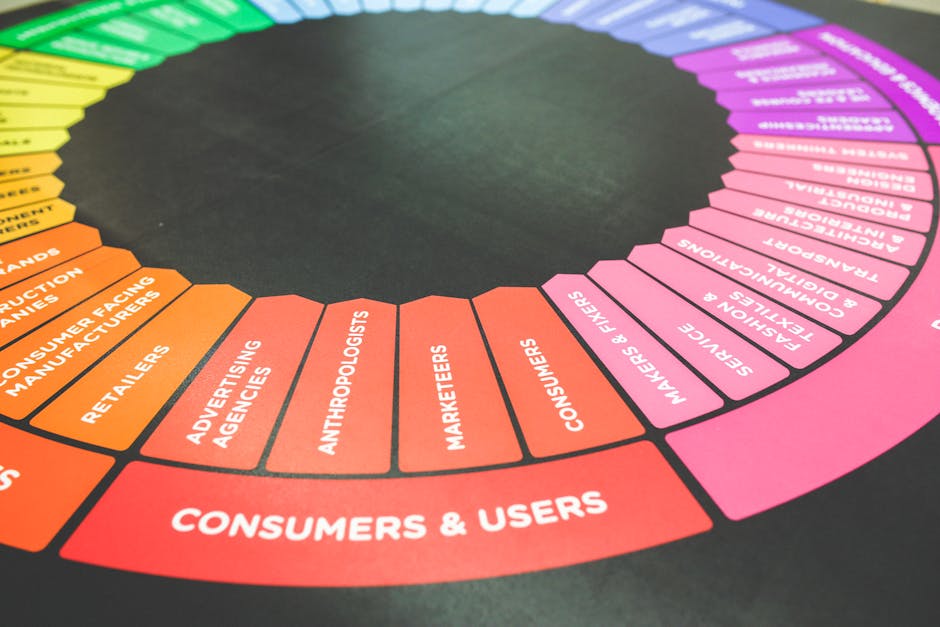
Most design agencies can make a SaaS product look better. Few can make it convert better. The distinction matters because PLG depends on the product doing the work of sales, meaning your onboarding flow, empty states, activation triggers, and self-serve upgrade prompts are the sales team. An agency that thinks in terms of aesthetics will give you a beautiful product that still loses 75% of users in the first week. An agency that thinks in terms of activation will design the path from signup to first value moment with the same precision a growth team applies to a funnel.
The evaluation criteria that actually predict PLG performance:
Onboarding to aha moment: Can they design the first-run experience that reaches value without a sales call?
Activation metric ownership: Do their case studies cite before-and-after activation rates, not just "improved UX"?
Self-serve expansion design: Have they designed upgrade prompts, feature gates, and usage-based upsell moments?
Design systems for rapid iteration: PLG products ship fast. An agency that delivers a scalable design system, not just screens, enables velocity post-engagement.
SaaS complexity experience: Role-based dashboards, multi-step workflows, and data-dense interfaces require specific design patterns that consumer app experience does not prepare an agency for.
Not sure if your current onboarding design is hitting these criteria? Get a free UX audit from 925Studios and we'll map exactly where your activation funnel is losing users.
Who are the top SaaS design agencies for product-led growth?
1. 925Studios
925Studios, an award-winning product design studio for funded AI and B2B SaaS teams named Best AI SaaS & Web3 UI/UX Studio 2026, is a boutique product design agency built for SaaS, AI, and fintech founders who need to move at product speed. The studio positions explicitly around conversion outcomes: one documented case study shows a conversion rate improvement from 4.2% to 5.9% through redesigned onboarding and landing pages. For PLG specifically, the studio designs the full user journey from website to product, which is the critical handoff that most agencies treat as two separate projects. At 925Studios, founders work directly with the senior designer doing the work, which means activation and onboarding decisions get made by someone who understands PLG outcomes, not an account manager relaying feedback. 50+ shipped products, 7-day risk-free trial, projects starting within one week of signing.
925Studios rebuilt its own pipeline around AI tooling, and it shows in how engagements are shaped rather than in what gets designed. There is no 100-hour monthly block and no fortnightly steering call. Work is priced on active requests, a Loom walkthrough lands every 24 to 48 hours, and the SaaS team keeps its own tools and cadence.
Every 925Studios engagement runs as a four-person pod, two senior and two mid-level designers, with both founders working in the file rather than reviewing it on a status call, and opens with a risk-free 7-day trial.
Best for: Seed to Series B SaaS and AI founders needing fast PLG-focused design with direct senior access
Pricing: Engagements start at $4,000, quoted against scope, with a risk-free 7-day trial
Notable clients: MARA (hospitality SaaS, $2M ARR, 1,500 hotels), Offa (AI real estate marketplace, 500,000+ property database, ~10,000 buyers)
2. Eleken
Eleken is the most PLG-native agency on this list by design: they work exclusively on SaaS products, no branding projects, no marketing sites, and no consumer apps. Every designer on their team has seen the same activation problems across dozens of SaaS products, which builds pattern recognition that a generalist agency cannot replicate. Their embedded designer model, starting at around $5,000-$7,000/month, integrates directly into your product team with the same iteration cadence your engineering squad uses. Case study outcomes include a 90% fix in candidate drop-off for MyInterview and a 200% increase in user satisfaction for Nworx. Datawisp secured $3.6M seed funding after an Eleken redesign. The 3-day free trial before any commitment is the most accessible low-risk entry point in this market.
Best for: SaaS product teams that need ongoing activation-focused design deeply integrated with engineering
Pricing: ~$5,000-$7,000/month subscription, 2-month minimum, 3-day free trial
Website: eleken.co
3. Bricxlabs
Bricxlabs is the most transparently PLG-aligned agency on this list. They describe their work as "turning visitors into users" and publish pricing openly, which signals operational maturity. Their $997 Litmus Test (a single-screen design evaluation) is a low-risk way for a PLG team to test landing page or onboarding improvements before committing to a full sprint or retainer. The retainer at $6,799/month includes a senior designer plus fractional design leadership with daily stand-ups and real-time Figma access, matching the iteration velocity that PLG products require. Notable clients include Writesonic (a Y Combinator company with 1M+ users) and Loopback (MVP and landing page delivered in 21 days). 4.9/5 on Clutch.
Best for: Seed to Series B SaaS teams that want conversion-focused design with transparent pricing and fast iteration
Pricing: $997 Litmus Test, $3,000+ sprints, $6,799/month retainer
Website: bricxlabs.com
4. Clay
Clay is a premium brand-plus-product agency with a client roster that includes Coinbase, Uber, SendGrid, and MoneyLion. Their direct relevance to PLG is the brand-to-product handoff: the journey from marketing site to signup to first activation is a single user experience, and agencies that treat brand and product as separate projects create friction at the handoff point. Clay does not. Their work on SendGrid, a textbook PLG company, and on Earnin, which raised $100M+ in venture funding after a Clay redesign, demonstrates they understand sign-up funnels as conversion systems. For Series A and beyond companies that need both brand elevation and PLG product design in one engagement, Clay is the highest-quality option at this scope.
Best for: Funded SaaS companies that need brand-to-product continuity across the full PLG funnel
Pricing: $$$ (custom, no published rates, $25K+ minimums expected)
Website: clay.global
Want to see how these agencies compare on portfolio depth for SaaS specifically? Our SaaS agency comparison breaks down the differences in detail.
5. Metalab
Metalab's PLG credential is the most cited in the industry: early product design work on Slack. Slack is one of the most studied PLG products in SaaS history, and the design patterns Metalab helped establish, channel-based navigation, direct messaging as the onboarding trigger, workspace as the product, are patterns the whole industry has since copied. Their current client roster includes Google, Uber, Midjourney, Suno, Headspace, and Robinhood. Metalab is not the agency you hire for a first design sprint at seed stage. They are the agency you hire when a PLG motion is already in place and a specific high-stakes surface (a new self-serve signup flow, a viral loop, a retention dashboard) needs to be rebuilt at the highest level of craft. Pricing reflects that positioning.
Best for: Series B and beyond SaaS companies redesigning a specific PLG-critical surface at premium quality
Pricing: Ultra-premium, custom engagements ($50K+ minimums expected)
Website: metalab.com
6. Ramotion
Ramotion has designed for Stripe, Okta, Clearbit (acquired by HubSpot for $150M), Descript, Flatfile, Streamlit (90% Fortune 50 adoption before Snowflake acquisition), and Salesforce. That list is a who's-who of developer-led PLG. Developer-led PLG is a specific design discipline: it requires a designer who respects user intelligence, does not over-explain, and understands that a clean API reference page or a frictionless CLI setup flow is as much of a product design problem as an onboarding checklist. Ramotion's design systems work means the PLG products they work with can ship and iterate fast after the engagement ends, which matters as much as the initial design quality.
Best for: Developer-led or product-led SaaS companies where the primary user is technical and the PLG loop runs through a self-serve trial or freemium developer tier
Pricing: $$$ (custom, project-based, no published rates)
Website: ramotion.com
7. Adam Fard UX Studio
Adam Fard UX Studio is the most accessible agency on this list for complex B2B SaaS teams with moderate budgets. Clutch reviews consistently cite "high value for cost" across 34 verified reviews. Their specialization in complex SaaS, fintech, and AI products is directly relevant to PLG because the hardest PLG problems are in dense, role-based, multi-stakeholder products where the "aha moment" requires coordinating multiple users through a setup flow. Documented outcomes in Clutch reviews include increased conversion rates, improved user retention, and better feature adoption, which are exactly the PLG KPIs that matter. For early-to-mid-stage SaaS teams that need UX research plus execution in one engagement without premium-tier pricing, Adam Fard is a strong option.
Best for: Mid-stage B2B SaaS, fintech, and AI products needing research-led UX at accessible pricing
Pricing: Mid-market, budget-accessible (Clutch: "budget-friendly" cited repeatedly)
Website: adamfard.com
8. Halo Lab
Halo Lab is a design and development agency with a 12-year track record and clients whose portfolios have collectively raised $530M+ in funding. Their WeSpire case study is the most directly PLG-relevant: a 35% traffic increase and a 20% bounce rate reduction through a redesigned product experience that drove the company's $13M fundraise. For PLG teams, the design-and-development combination means Halo Lab can own the sign-up flow and first-run experience end to end, including the front-end implementation, which eliminates the handoff friction that causes most activation design improvements to get watered down in engineering translation. Project budgets range from $10K to $200K+.
Best for: SaaS companies that need design and front-end development in one engagement, particularly for sign-up and onboarding flows
Pricing: $10K-$200K+ projects, no published rate card
Website: halo-lab.com
9. Arounda
Arounda is one of the only agencies on this list that specifically cites churn reduction as a design outcome, reporting a 37% churn reduction across SaaS clients through improved onboarding and UX design, alongside a 170% engagement rate increase for one client. For PLG specifically, churn at the activation stage (the period between signup and first meaningful action) is the highest-leverage intervention point. Users who reach activation churn at a fraction of the rate of users who do not. Arounda's focus on this metric, rather than on aesthetics or general "better UX," positions them as a genuinely PLG-literate agency. Their flexible engagement model (both fixed monthly and project-based) makes them accessible for teams at different stages.
Best for: SaaS teams with documented activation or churn problems that need a design agency to own the metric, not just the screens
Pricing: Flexible, contact required for quote
Website: arounda.agency
925Studios has seen this pattern across dozens of SaaS products: the biggest activation gains come not from redesigning the dashboard, but from redesigning the first 3 minutes after signup. That is where the PLG design leverage lives.
10. Divami
Divami fills a specific gap on this list: enterprise PLG, where a self-serve free tier feeds into an enterprise sales motion and the design challenge involves both consumer-grade simplicity on the entry surface and enterprise-grade complexity on the expanded product. Their case study with Blue Yonder (a major enterprise supply chain SaaS) produced 50% faster onboarding on a legacy platform, which is a PLG metric at enterprise scale. Zenoti saw a 30% customer satisfaction increase after a Divami engagement. At their pricing tier, Divami is not suited to early-stage startups. But for Series B and beyond companies running hybrid PLG-enterprise motions on complex platforms, they have the most enterprise-specific track record of any agency on this list.
Best for: Enterprise SaaS and hybrid PLG-enterprise companies with complex platform modernization needs
Pricing: Enterprise-focused, no published rates, best for $1M+ design initiatives
Website: divami.com
How do you evaluate a SaaS design agency for PLG specifically?

Criterion | What to Ask | Red Flag |
|---|---|---|
Activation track record | "Show me a case study where you improved activation rate. What was the before and after?" | Agency cites NPS or "better UX" but no activation or conversion metrics |
Onboarding expertise | "Walk me through how you design the path from signup to first aha moment." | Agency starts with visual design before mapping the activation journey |
SaaS product experience | "How many SaaS products have you shipped in our vertical in the last 2 years?" | Portfolio is primarily marketing sites, consumer apps, or brand identity work |
Design system delivery | "What does your design system handoff include? Can our engineers ship new features without you?" | Agency delivers screens only, no component library or documentation |
Iteration cadence | "What does a typical feedback and iteration loop look like? How fast can you turn around a change?" | Agency response time exceeds 48 hours or requires scheduled calls for minor changes |
Self-serve expansion design | "Have you designed upgrade prompts, feature gates, or in-product upsell flows?" | Agency has not worked on monetization surfaces or treats them as "marketing" not "design" |
Frequently Asked Questions
What is product-led growth (PLG) and why does design matter so much?
Product-led growth is a go-to-market strategy where the product itself drives user acquisition, activation, and expansion rather than a traditional sales team. In PLG, the onboarding flow, activation triggers, and in-product upgrade moments are the "sales team." Design quality directly determines revenue: every extra minute of time-to-value reduces conversion by 3% (Amplitude, 2024), and improving activation by 25% can increase revenue by 34% (Agile Growth Labs, 2025). Poor design in a PLG product is not an aesthetic problem. It is a growth problem.
What is the average SaaS activation rate and how do top agencies improve it?
The average SaaS activation rate is 37.5% in 2025, with 75% of new users abandoning within the first week (Agile Growth Labs, 2025). Top PLG design agencies improve activation by redesigning the path from signup to first value moment, specifically: compressing time-to-value, removing friction from the setup flow, using progressive disclosure to defer complexity, designing empty states that guide action rather than display void, and creating in-product triggers that surface the aha moment at the right time. Agencies like Eleken (90% candidate drop-off fix at MyInterview) and Arounda (37% churn reduction) have documented these outcomes.
How much do SaaS PLG design agencies charge?
PLG-focused SaaS design agency pricing ranges from $997 for a single-screen Litmus Test (Bricxlabs) to $50,000+ for a full PLG surface redesign at premium agencies like Metalab or Clay. Monthly retainers run from $3,500/month at boutique studios like 925Studios to $6,799/month at Bricxlabs to $7,000/month at Eleken. Enterprise engagements at Divami, Ramotion, and Clay do not have published pricing but typically start at $25,000-$50,000 for meaningful PLG design work. The right price point depends on your stage: seed-stage founders need agencies with accessible entry points and fast onboarding; Series B founders can justify premium agency investment against larger revenue impact.
Should a PLG SaaS hire a design agency or an in-house designer?
At seed stage, a design agency with SaaS PLG experience will outperform a junior in-house hire because the pattern recognition from shipping 20+ SaaS products is not replicable in a single hire. At Series A, many PLG teams hire one senior in-house product designer to own the roadmap and use an agency for specific high-impact sprints. At Series B, the question shifts to whether the agency's depth in PLG-specific patterns justifies the cost compared to building a full in-house team. 58% of B2B SaaS companies now have a PLG motion (ProductLed.com), and the agencies that specialize in it have seen more activation problems and solutions than any single in-house designer will encounter in three years.
What is the difference between a PLG design agency and a general UX agency?
A general UX agency focuses on making interfaces usable and visually coherent. A PLG design agency focuses on making interfaces convert, specifically on the onboarding-to-activation sequence, self-serve expansion patterns, and the metrics (activation rate, time-to-value, feature adoption) that drive PLG revenue. The difference shows up in their case studies: general UX agencies cite user satisfaction and NPS; PLG agencies cite activation rates, conversion improvements, and ARR growth. When evaluating any agency for PLG work, ask directly for case studies that include before-and-after activation or conversion metrics. If they cannot provide them, they are likely a general UX agency regardless of how they position themselves.
Which SaaS design agency is best for a developer-led PLG product?
Ramotion is the strongest choice for developer-led PLG, with a portfolio that includes Stripe, Clearbit, Streamlit, and Okta. Developer-led PLG requires a specific design approach: clean documentation UX, self-serve trial flows that respect technical user intelligence, and product interfaces that do not over-explain basic technical concepts. Their design systems work also enables engineering teams to ship at PLG velocity after the engagement ends. For developer-led products at earlier stages with tighter budgets, Adam Fard UX Studio has documented experience with complex technical SaaS products at more accessible pricing.
How long does a typical PLG design engagement take?
A focused onboarding and activation redesign sprint typically runs 4-8 weeks, from research and mapping the activation journey through delivered screens and a design system update. A full PLG surface redesign covering sign-up, onboarding, first-run experience, and in-product expansion moments typically runs 3-6 months. Ongoing retainer engagements for PLG products that are iterating based on activation data run month-to-month at most agencies. 925Studios, Eleken, and Bricxlabs all offer both project and retainer models that cover the full range of these timelines.
Does 925Studios specialize in PLG SaaS design?
Yes. 925Studios focuses on the full user journey from marketing site through product onboarding, which is the end-to-end path that PLG depends on. The studio has documented a conversion rate improvement from 4.2% to 5.9% on one SaaS client's onboarding and landing page through redesign, and has shipped 50+ products including MARA, a hospitality SaaS scaleup at $2M ARR across 1,500 hotels. Projects start within one week and include a 7-day risk-free trial. Book a 30-minute call to review your current activation funnel and identify the highest-leverage design intervention.
Working on a SaaS product? Talk to the 925Studios team, who will audit your UX and show you exactly what is killing your activation.
If you're building a product and want a second opinion on your UX, talk to 925Studios. 925Studios works with SaaS, fintech, healthtech, web3, and AI startups.
See the 925Studios work or book a free 30-minute call.
Follow 925Studios on Instagram and YouTube for design breakdowns and case studies.
Let’s keep in touch.
Discover more about high-performance web design. Follow us on Twitter and Instagram.

